Institutional Laundry Enzyme Troubleshooting for Detergent Factories
Institutional laundry formulas are asked to work under pressure: mixed soil loads, variable wash temperatures, alkaline builders, oxidants, surfactant blends, fragrance systems, preservatives, and long supply chains. When enzyme performance drifts, the issue is rarely one ingredient in isolation.
Foamforge supplies bulk enzymes for detergent manufacturing with troubleshooting support built around real formulation decisions: stain target, wash program, process sequence, ingredient compatibility, storage profile, and cost-in-use. We help detergent factories identify where enzyme value is being lost before scale-up, during blending, or after finished-goods storage.
Request a quote for institutional laundry enzyme concentrates, compatibility guidance, and batch-scale planning.
Where institutional laundry enzyme issues usually start
Enzymes can strengthen stain removal, reduce rewash burden, and support lower-temperature wash programs. But in institutional laundry detergents, they are exposed to aggressive formulation conditions. Performance loss may come from processing heat, high pH exposure, incompatible oxidants, excessive shear, preservative interactions, water activity, or poor addition sequencing.
Foamforge evaluates enzyme fit across the full detergent manufacturing pathway, not just the stain target.
Common troubleshooting signals
| Formulation signal | Likely technical causes | Foamforge troubleshooting focus |
|---|---|---|
| Reduced protein stain removal | Protease incompatibility, oxidant exposure, high-temperature hold, poor storage stability | Protease grade selection, addition sequence, stabilizer environment, finished product hold conditions |
| Weak starch stain removal | Amylase deactivation, builder interaction, unsuitable wash pH window | Amylase compatibility review, chelant/builder balance, wash profile alignment |
| Oily soil performance inconsistent | Lipase inhibited by surfactant system or fragrance solvent | Surfactant/fragrance compatibility screen, emulsification balance, process timing |
| Fabric greying or redeposition | Enzyme benefit masked by dispersant or builder imbalance | System-level review of surfactant, builder, polymer, and enzyme contribution |
| Loss of performance after storage | Moisture, pH drift, oxidant carryover, preservative stress, thermal exposure | Stability risk mapping, packaging assumptions, production and warehouse conditions |
| Batch-to-batch variability | Dosing sequence variation, mixing energy, concentrate handling, raw material changes | Plant process review, dosing protocol, incoming raw material control points |
Enzyme classes used in institutional laundry detergents
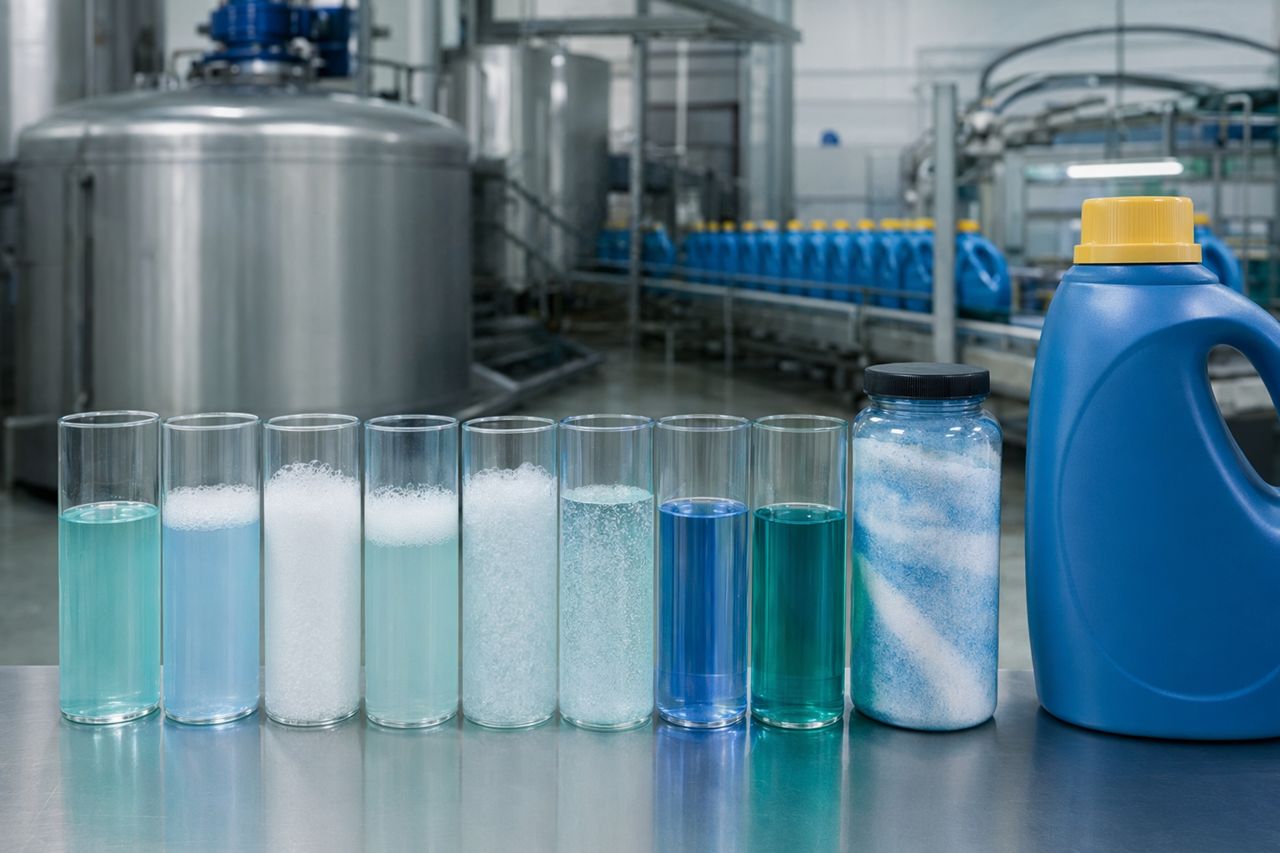
Foamforge supports formulation teams selecting enzyme systems for liquid and powder institutional laundry detergents.
Protease for protein-based soils
Protease is commonly used for blood, egg, dairy, grass, and body soils. In institutional laundry, protease must remain compatible with alkaline systems, surfactant packages, stabilizers, and storage conditions. Foamforge helps identify protease options suited to the intended wash program and finished product format.
Amylase for starch-heavy loads
Amylase supports removal of starch-based soils from food service, hospitality, and healthcare laundry streams. Troubleshooting often focuses on builder selection, process temperature, and whether the enzyme remains available after storage in the full formula.
Lipase for fats and body oils
Lipase can improve performance on sebum, cooking oils, and fatty residues. Because lipase response depends heavily on surfactant structure and soil emulsification, Foamforge reviews the total cleaning system rather than treating lipase as a drop-in additive.
Cellulase for fabric appearance and particulate release
Cellulase may support fabric appearance, soil release, and reduction of embedded particulate residues in selected applications. Suitability depends on textile mix, wash repetition, and the positioning of the detergent product.
Mannanase for gum and thickener residues
Mannanase can help address guar-based and galactomannan-containing soils found in food and personal care residues. It is typically considered when institutional wash loads show persistent gum-like staining or residue.
Troubleshooting by detergent format
Liquid institutional laundry detergents
Liquid systems can expose enzymes to sustained contact with surfactants, solvents, preservatives, water, and alkaline ingredients. The main risks are long-term stability loss, pH drift, and incompatible oxidizing components.
Foamforge helps assess:
- Enzyme concentrate compatibility with the surfactant package
- Order of addition during blending
- Heat exposure during production
- Preservative and solvent interactions
- Viscosity and phase stability risks
- Finished product storage assumptions
- Packaging and warehouse temperature exposure
Powder institutional laundry detergents
Powder systems can present different challenges: moisture control, segregation, dust management, builder compatibility, and exposure to bleaching systems. Enzyme stability depends on granule protection, powder humidity, and the production process.
Foamforge helps assess:
- Enzyme format suitability for dry blending
- Moisture exposure during manufacturing and storage
- Compatibility with alkaline builders and oxygen bleach systems
- Segregation risk in finished powder
- Packaging barrier assumptions
- Dosing uniformity at plant scale
A practical diagnostic sequence for detergent factories
When institutional laundry enzyme performance is inconsistent, Foamforge recommends a structured review before changing multiple variables at once.
1. Confirm the stain target and wash profile
Define the priority soils, wash temperature range, alkalinity, cycle time, water hardness, and institutional customer segment. An enzyme that fits one wash program may underperform in another.
2. Review the full formula environment
Enzymes interact with surfactants, builders, chelants, polymers, solvents, preservatives, fragrances, bleaches, and process aids. Foamforge reviews the formula as a system to identify avoidable incompatibilities.
3. Check process sequence and hold conditions
Late-stage enzyme addition, controlled mixing, and reduced thermal exposure can materially affect finished product performance. Many issues are solved by changing process order rather than changing the enzyme itself.
4. Compare fresh product against stored product
If performance is strong after blending but weaker after storage, the problem is likely stability-related. Foamforge helps isolate pH drift, moisture exposure, oxidant carryover, or incompatible minor ingredients.
5. Validate at the intended production scale
Lab compatibility does not always predict plant behavior. Foamforge supports scale-up discussions around tank geometry, mixing energy, dosing accuracy, batch hold time, and raw material handling.
Compatibility factors that matter commercially
For detergent manufacturers, enzyme selection is not only about cleaning performance. It must also protect production efficiency, procurement reliability, and finished-goods consistency.
Foamforge focuses on:
- Performance fit: enzyme class and grade aligned to the institutional stain profile
- Formulation compatibility: surfactant, builder, pH, preservative, fragrance, and bleach considerations
- Manufacturing practicality: addition sequence, mixing, heat exposure, and batch timing
- Storage confidence: finished product stability under realistic warehouse conditions
- Supply continuity: bulk availability, documentation, lead time planning, and repeatable quality
- Cost-in-use discipline: enzyme value assessed against the total detergent system, not isolated ingredient price
What Foamforge provides
Foamforge works with detergent factories that need bulk enzyme supply and technical guidance for institutional laundry products.
We can support:
- Bulk enzyme concentrate sourcing for laundry detergent manufacturing
- Protease, amylase, lipase, cellulase, and mannanase selection discussions
- Liquid and powder detergent compatibility review
- Scale-up planning for plant blending
- Stability risk assessment for finished formulations
- Troubleshooting for performance drift and batch variability
- Documentation and commercial supply coordination for B2B procurement teams
Embedded explainer video
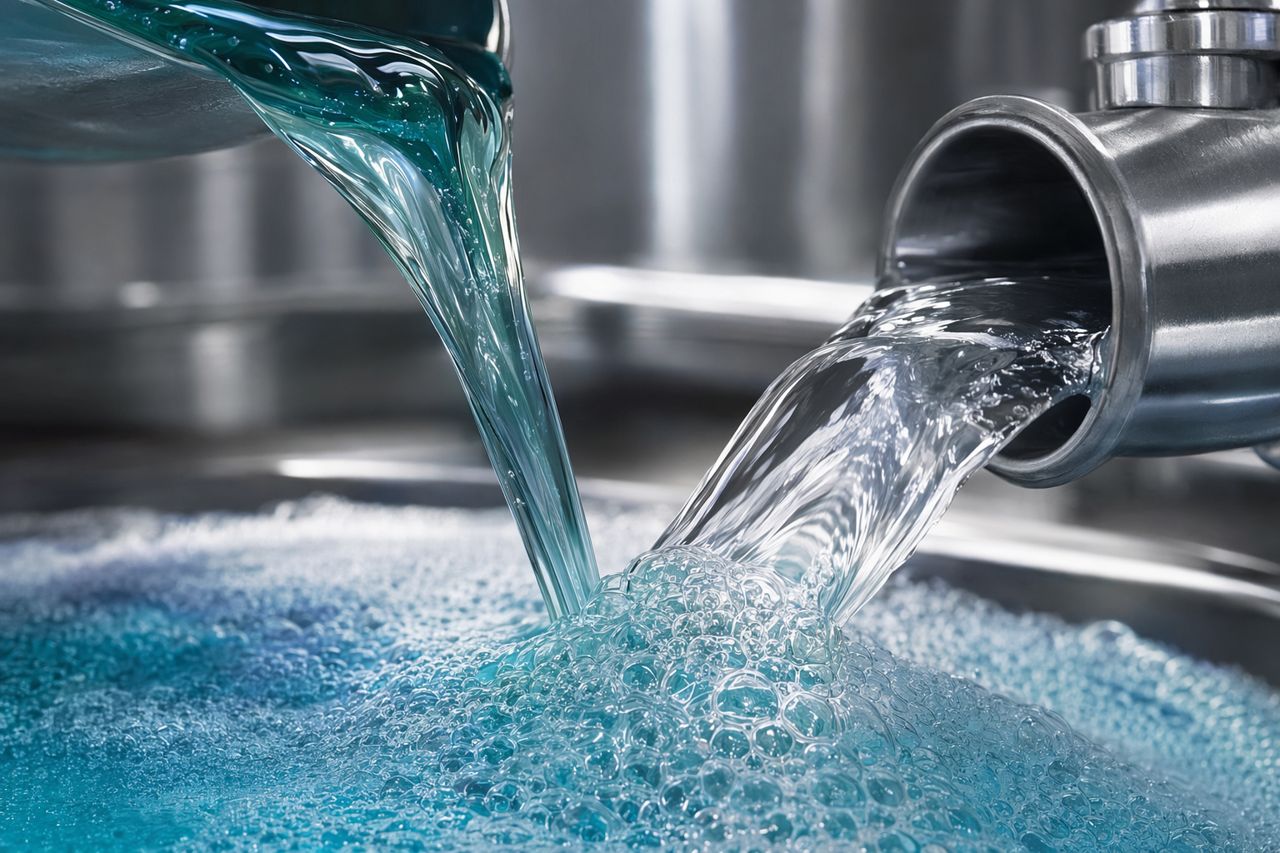
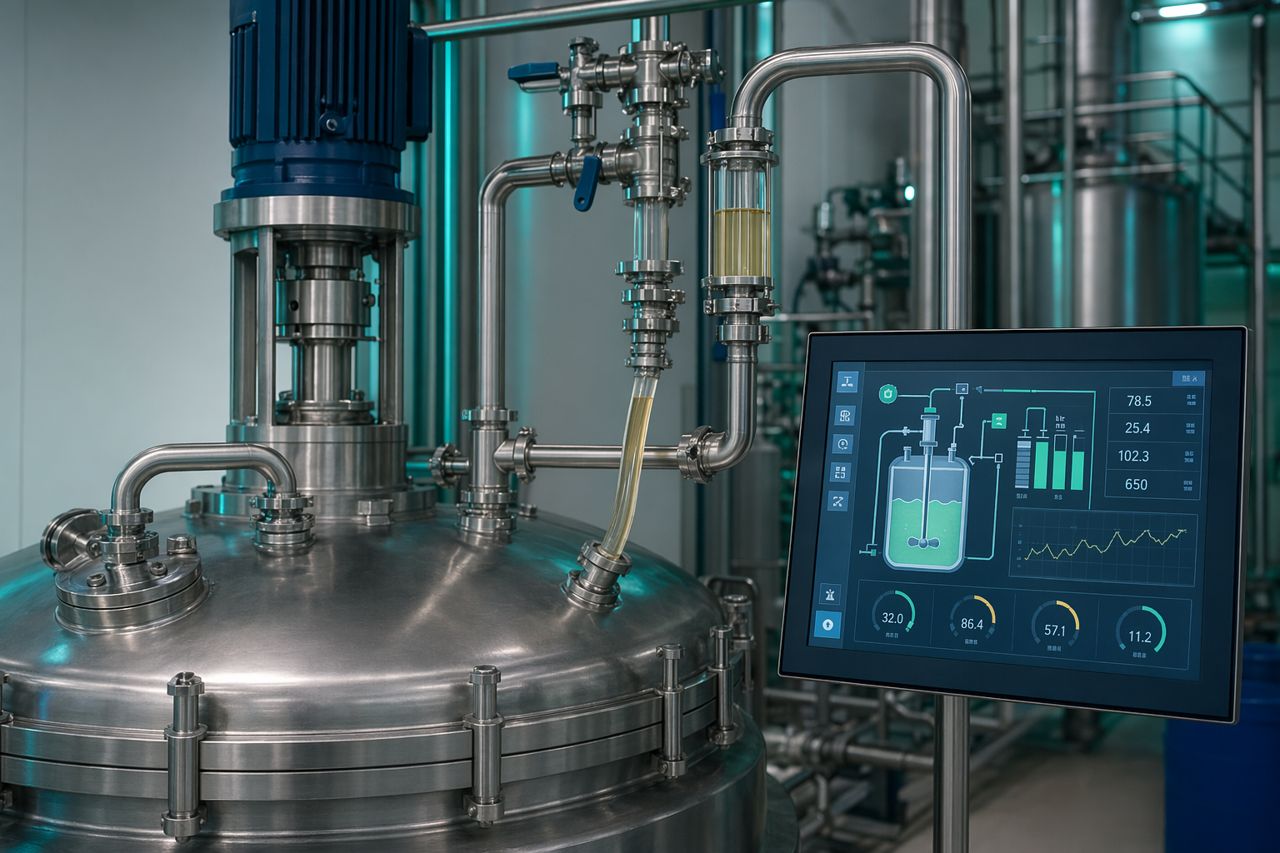
A one-minute faceless explainer video on this page shows how enzyme performance can be lost between lab formula, blending tank, storage, and institutional wash use. The visual sequence uses macro foam dynamics, translucent detergent streams, stainless process equipment, and parameter overlays to explain troubleshooting without a presenter or avatar.
Request a quote
If you are developing or troubleshooting an institutional laundry detergent, Foamforge can help you evaluate enzyme options against your formula, process, and commercial requirements.
Use the on-site form below to request a quote for bulk enzymes for detergent manufacturing. Include your detergent format, target soils, approximate production scale, key compatibility constraints, and expected supply timeline so our team can respond with relevant options.
Request a quote through the contact form on this page.