How Commercial Laundry Dosing Systems Influence Detergent Product Design
Commercial laundry dosing systems are often treated as downstream equipment. For detergent manufacturers, they are upstream design constraints.
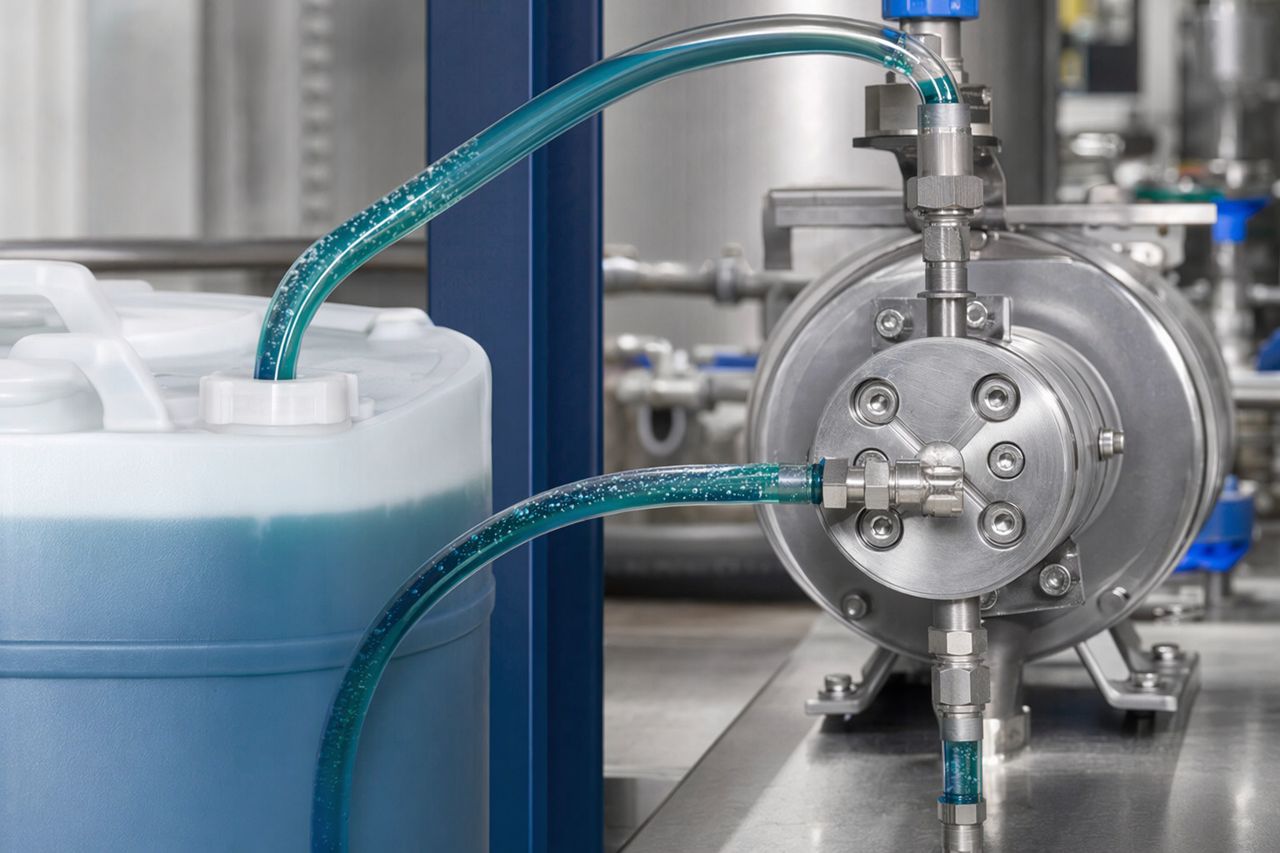
A formula that performs well in a lab jar can behave differently after passing through peristaltic pumps, long feed lines, manifolds, water-flush systems, squeeze tubes, drums, and closed-loop service cabinets. Viscosity, phase stability, foam behavior, preservation strategy, packaging format, and enzyme compatibility all become commercial factors, not just formulation preferences.
For manufacturers sourcing bulk enzymes for detergent manufacturing, dosing architecture should be part of the specification conversation from the start.
Dosing systems are part of the product experience
In commercial laundry, the customer rarely measures detergent manually. The site relies on a dosing program set by a chemical supplier, distributor, service technician, or in-house laundry manager. That means the product must work through equipment as consistently as it works in the wash.
A dosing system influences:
- how easily the concentrate is drawn from the container
- whether product remains homogeneous during storage and service
- how the formula responds to pump shear and line residence time
- how quickly it clears from tubing during water flush
- whether foam interferes with priming, sensors, or accurate delivery
- how operators perceive reliability during drum changes and service calls
- how sales teams position economy, convenience, and performance
For enzyme-containing laundry products, the system also influences how aggressively the formula can be built. High alkalinity, certain solvents, oxidizing components, and some preservation choices may support one part of the formulation while challenging enzyme stability or compatibility.
The pump does not care about the marketing claim
Commercial dosing equipment is practical. It moves fluid. It does not compensate for poor viscosity control, unstable dispersion, excessive aeration, or packaging that makes priming difficult.
Viscosity must match the hardware
A highly concentrated laundry detergent may look commercially attractive because it reduces freight and storage burden. But if the product is too viscous for the intended pump, the field team may face slow priming, inconsistent delivery, tube wear, or customer complaints.
A lower-viscosity formula may dose more easily, but can require more careful control of suspension, surfactant structuring, fragrance solubilization, and enzyme protection. The correct answer depends on the channel: distributor-serviced drum systems, on-premise laundry installations, hospitality accounts, healthcare laundries, or industrial workwear operators may each favor different handling properties.
Foam control affects both cleaning and delivery
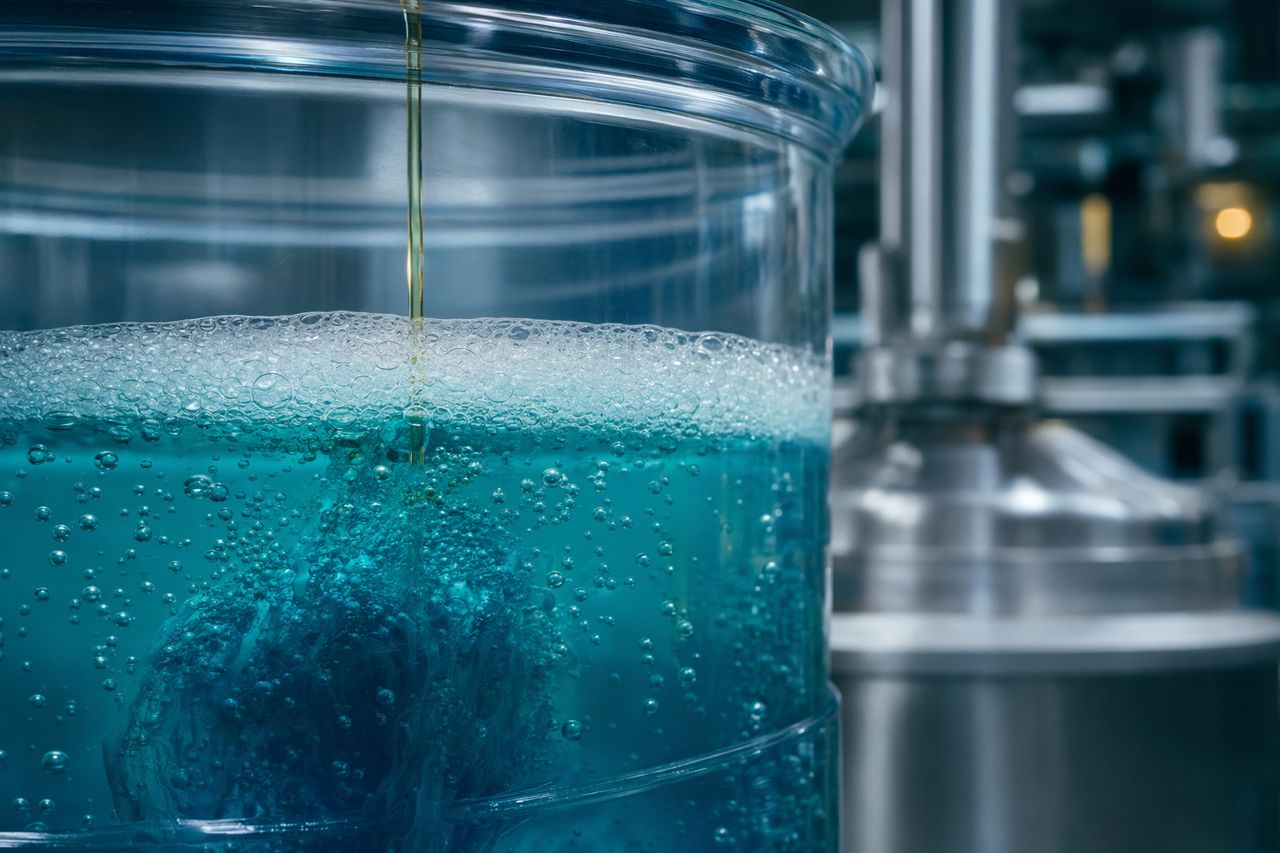
Foam is not only a wash-performance issue. It also matters before the product reaches the washer. Aerated product can cause pump inconsistency, poor line visibility, and frustrating service calls. Controlled foam formation during wash is useful; uncontrolled foam during dosing is not.
Formulation teams should evaluate foam behavior across:
- concentrate storage and handling
- pump priming
- line drawdown
- dilution at the injection point
- wash agitation and soil load
- rinse clearance
Enzyme systems can support stain removal and fabric care, but they need to sit inside a formulation architecture that manages foam deliberately.
Packaging format changes the formulation brief
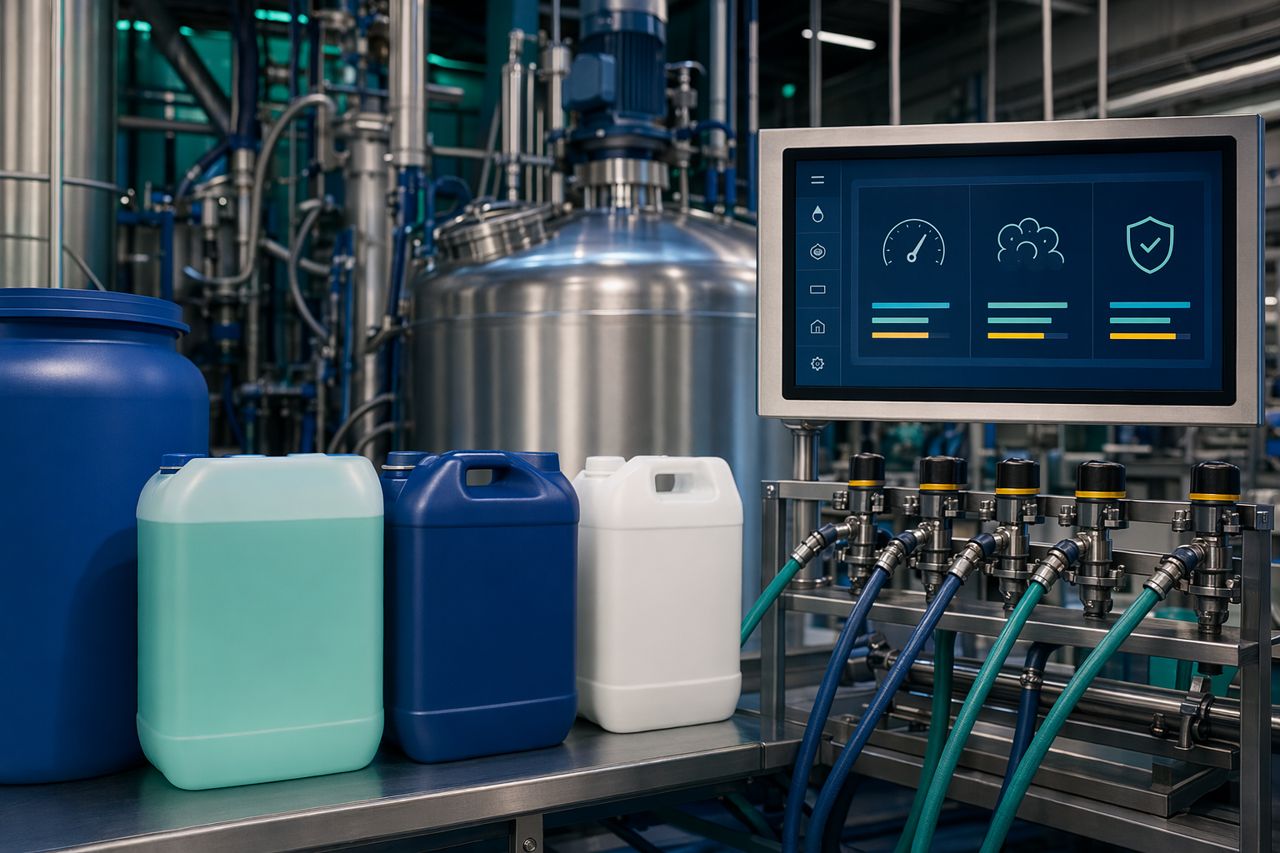
The same detergent chemistry may require different design choices depending on whether it is sold in drums, pails, cartridges, bag-in-box systems, or closed-loop containers.
Drums and pails
Drums and pails are common in distributor-driven commercial laundry. They are familiar, cost-effective, and easy to stage. They also expose the formula to repeated handling, variable storage temperatures, and operator-dependent setup.
Formulation priorities typically include:
- long-term homogeneity without routine agitation
- pumpable viscosity under realistic storage conditions
- low tendency to crust around dip tubes and caps
- clear identification of product type and connection method
- robust preservation and stability across the expected selling life
Closed-loop systems
Closed-loop packaging can support safety, brand control, and service efficiency. It may also require tighter control of viscosity, connector compatibility, venting behavior, and residual product in the pack.
For enzyme detergents, closed-loop formats can help reduce operator contact and support consistent product use. The formulation still needs compatibility work around surfactants, builders, preservatives, dyes, fragrance systems, and any components that could compromise enzyme performance over time.
Highly concentrated formats
Concentrates can improve logistics and cost-in-use positioning, but they narrow the formulation window. More actives in less water can increase interactions among surfactants, salts, builders, solvents, and enzymes.
Before pushing concentration higher, manufacturers should confirm:
- physical stability through the intended shelf and service period
- enzyme compatibility within the finished formula
- pumpability through target dispensing equipment
- acceptable foam behavior at dilution
- manageable manufacturing viscosity during blending and filling
- clear field guidance for technicians and distributors
Operator behavior should influence product design
A formulation may be technically sound and still fail commercially if it is difficult for the field to use. Laundry rooms are busy, wet, noisy, and often managed by teams with mixed technical training.
Operators may:
- delay drum changeovers until product runs low
- store containers near heat, steam, or cold dock doors
- connect the wrong line if labeling is unclear
- override settings when wash results disappoint
- blame the detergent when dosing equipment needs service
- judge product quality by odor, color, foam, and handling feel
This does not mean formulation should be simplified at the expense of performance. It means the product brief should include field reality. Clear viscosity, color stability, low crusting, consistent drawdown, and sensible packaging can reduce avoidable service noise.
Enzyme selection should follow the dosing model
Foamforge supplies bulk enzyme solutions for manufacturers developing industrial and commercial cleaning products. In commercial laundry, enzyme selection is not isolated from dosing design. Protease, amylase, lipase, cellulase, and blended systems each need to be considered in the context of product format, companion ingredients, wash conditions, and expected storage.
Key questions for formulation leaders include:
- Will the enzyme be used in a main detergent, booster, presoak, spotter, or specialty additive?
- Is the product neutral, mildly alkaline, or built for higher alkalinity?
- Will oxidizing chemistry be separated or present in the same program?
- What surfactant system is required for soil type and fabric mix?
- Does the target dosing equipment favor thin liquids, structured concentrates, or modular feeds?
- How will the product be packaged, shipped, stored, and installed?
- What claims will sales teams make, and what field evidence will they need?
These questions help prevent a common failure mode: choosing an enzyme for stain performance first, then discovering that the final commercial format makes stability, pumpability, or cost position difficult.
Formulation and sales strategy are linked
Dosing systems shape more than the lab brief. They also shape how the product is sold.
A high-strength concentrate can support lower delivered volume and less warehouse space. A closed-loop pack can support service simplicity and account control. A lower-viscosity detergent can reduce installation friction in accounts with standard pumps. A modular enzyme additive can let distributors upgrade performance without replacing every base product.
Each choice has implications for pricing, margin, distributor training, service burden, and customer retention.
Where formulation leaders can create commercial advantage
Detergent manufacturers can improve launch confidence by aligning enzyme selection, dosing hardware, and packaging before scale-up. Practical advantages include:
- fewer reformulation cycles after field trials
- better compatibility between product viscosity and pump capability
- more predictable stability in the finished detergent
- clearer technical support for distributors and sales teams
- reduced risk of foam, priming, or line-residue complaints
- stronger cost-in-use positioning for target laundry accounts
Scale-up considerations for enzyme detergents
Manufacturing scale introduces its own constraints. A formula that looks stable in a small sample may respond differently during larger batch mixing, bulk holding, filtration, filling, and transport.
For enzyme-enabled commercial laundry products, review:
- order of addition during blending
- exposure to heat during processing and storage
- shear conditions in mixing and pumping
- compatibility with preservatives, dyes, fragrance, and solvents
- finished product pH and buffer approach
- container headspace and air entrainment
- cleaning procedures for shared manufacturing equipment
The goal is not to overcomplicate the project. The goal is to define the real operating window before a product reaches the customer.
A practical development sequence
For a commercial laundry detergent or additive, Foamforge recommends a formulation-led sequence:
- Define the target laundry channel, soil profile, fabric mix, and wash program.
- Confirm the dosing system types the product must support.
- Select the packaging format and service model.
- Establish viscosity, foam, and handling targets.
- Screen enzyme candidates against the full formula environment.
- Evaluate stability in the intended commercial format.
- Run pilot blending and filling checks before production launch.
- Prepare distributor and field-service guidance based on real product behavior.
This sequence keeps enzyme choice tied to the system that will actually deliver it.
Talk to Foamforge about enzyme fit for dosing-driven products
If you are developing a commercial laundry detergent, booster, presoak, or specialty additive, Foamforge can help align bulk enzyme selection with your formula architecture, packaging format, and dispensing channel.
Use the on-site request a quote form to share your target application, product format, expected dosing system, and scale-up timeline. We will respond with a practical supply and compatibility discussion for your manufacturing program.